
Ama Dablam (6,812m)
Ama Dablam: The Jewel of the Khumbu
Located in the Sagarmatha National Park, just a few kilometers south of Mount Everest, Ama Dablam (6,812m) is a major peak of the Khumbu region. While it does not reach extreme altitudes, it is renowned for its beauty and technical routes and prominent ridges.
The Southwest Ridge, the mountain’s most famous line, was first climbed in 1961 by Mike Gill, Barry Bishop, Mike Ward, and Wally Romanes. Their success established the ridge as a classic of Himalayan mountaineering.
The name “Ama Dablam” translates to “Mother’s Necklace,” a reference to the mountain’s protective ridges and its iconic hanging glacier. For many climbers, it represents one of the most aesthetic objectives in the Himalayas, standing as a landmark of rock and ice in the heart of the Everest region.
Ama Dablam Historical Timeline
After a reconnaissance in 1958, the first ascent was achieved on March 13, 1961, by Mike Gill, Barry Bishop, Mike Ward, and Wally Romanes via the Southwest Ridge during Hillary’s Silver Hut expedition.
American Jeff Lowe completed a world-class solo ascent of the South Face (VI AI4 M6). This climb remains a benchmark for technical skill and commitment in the Himalayas.
A Japanese team opened a formidable route on the West Face (VI 5.7 ice 80°). It was a major step in exploring the massive rock and ice walls away from the ridges.
Tomaž Humar and Vanja Furlan opened a new, extremely direct route on the Northwest Face (VI 5.7 AI5). This ascent earned them the Piolet d’Or, the highest distinction in mountaineering.
Jury Koshelenko and Valeriy Babanov opened “Paratago” on the Northwest Face. Babanov had already won a Piolet d’Or for a solo attempt on this wall, highlighting its extreme complexity.
Reinforcing the mountain’s status for elite athletes, French climber Charles Dubouloz completed a rare solo winter ascent of the North Face, emphasizing that Ama Dablam still offers immense challenges for modern alpinism.
The Expedition
It was a great pleasure to reunite with Jean-Marc Wojcik for this expedition. We have run thousands of kilometers together in Nepal, including the Himal Race and the Everest Sky Race. A few years after this climb, we met again during our Kangchenjunga expedition.
For Ama Dablam, we were only two, accompanied by a liaison officer and without Sherpas. Since it was spring, the vast majority of expeditions were focused on the 8,000m peaks, allowing us to enjoy a nearly empty mountain. This was exceptional and very different from the crowded autumn season. Only six Russians and three other French climbers were on the mountain with us.
Trekking to the Ama Dablam
April 23: Kathmandu - Lukla - Monjo
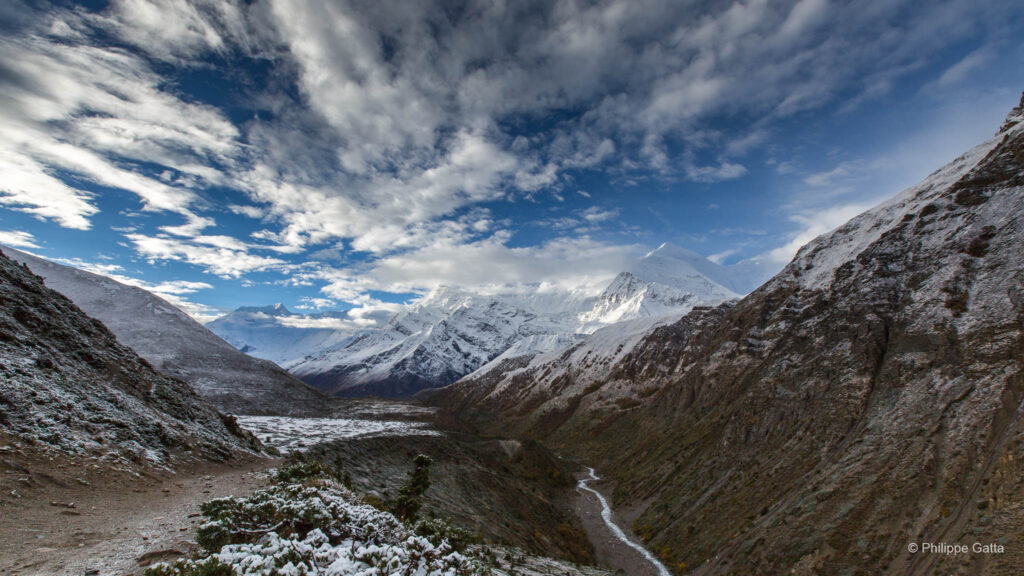
We flew to Lukla and walked up to Monjo (2,850m). There were very few people and no yaks, which made for a much cleaner trail. The weather was clear but windy as we prepared to reach Ama Dablam base camp via Namche Bazaar.
- Walk: 3h05
- Elevation: +515m (440m/h) / -530m (460m/h)
- Altitude Range: 2,496m – 2,795m
April 24: Monjo - Namche Bazaar
We arrived in Namche Bazaar (3,450m) after two hours of trekking. We then climbed to Khumjung (3,860m) for our first sighting of Ama Dablam before returning to Namche for the night. Despite overnight snow, the climbing route looked dry, though conditions remained cloudy with a strong southwest wind.
- Walk: 3h10
- Elevation: +1,120m (550m/h) / -545m (670m/h)
- Altitude Range: 2,738m – 3,746m
April 25: Namche Bazaar - Tengboche
We arrived in Tengboche after a three-hour trek from Namche. The morning was clear, revealing high winds over Everest, while Ama Dablam remained visible and cloud-free. We are currently well-acclimatized with an O2 saturation of 92%, preparing to move toward base camp tomorrow.
- Walk: 2h55
- Elevation: +800m (480m/h) / -380m (640m/h)
- Altitude Range: 3,245m – 3,788m
April 26: Tengboche - Ama Dablam BC (4,600m)
Jean-Marc and I entered a period of “radio silence,” sending a final message while at 4,300m during our approach to Base Camp (4,600m). The mountain was nearly empty, with only six Russians at Camp 2, and three French climbers supported by three Sherpas elsewhere on the peak.
- Walk: 2h50
- Elevation: +903m (470m/h) / -222m (610m/h)
- Altitude Range: 3,721m – 4,600m
The Ascent
April 27: BC - Camp 1 (5,756m)
Expecting bad weather, we skipped our rest day and carried 25kg packs to Camp 1. We decided to sleep there to establish the camp before retreating to Base Camp for the storm. The rapid ascent from 3,850m to 5,750m in just two days was punishing; my O2 saturation dropped to 60% and I was unable to eat, though I felt slightly better by morning.
- Climb: 5h40
- Elevation: +1,230m (320m/h) / -77m (280m/h)
- Altitude Range: 4,600m – 5,756m
- Load: 25kg pack
April 28: Camp 1 - BC
At sunrise, we cached our gear and secured the tent under rocks to protect it from the forecasted storm. Jean-Marc and I then descended to Base Camp. The rapid ascent had taken its toll; while my O2 saturation improved to 75%, Jean-Marc’s stayed below 60% until we reached lower altitudes.
By late afternoon, snow and thunderstorms moved in. We learned that two Russian climbers had been stranded at Camp 3 for four days, and another team nearby decided to end their expedition due to the deteriorating conditions.
- Walk: 2h
- Elevation: +20m (290m/h) / -1,115m (720m/h)
- O2 Saturation: 75% (C1) / 88% (BC)
April 29: BC
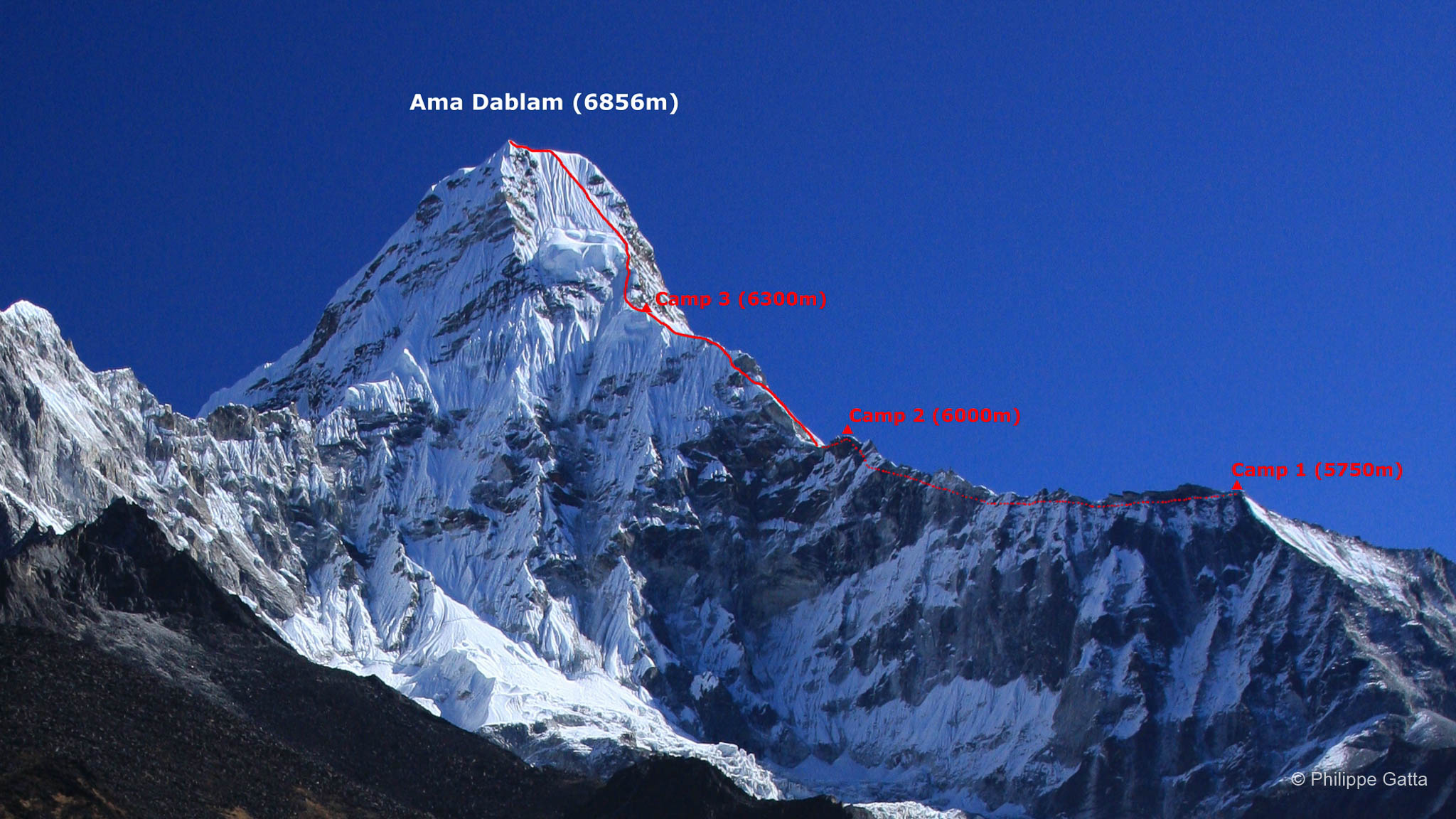
After heavy snow down to 4,300m, we took our first rest day at base camp. We established a strategy for the final push: move to Camp 1 (5,750m), then to the rocky Camp 2 (6,000m), followed by a summit attempt on the 2nd. The final ascent involves mixed climbing up to 6,200m before transitioning to steep ice slopes.
The situation on the mountain remained serious; the Russian couple stranded at Camp 3 for four days was finally assisted down by their teammates and evacuated by helicopter to Kathmandu this morning.
- Rest Day: Base Camp (4,600m)
- Status: First full rest since Kathmandu
- Planned Summit Window: May 2nd
April 30: BC - Camp 1
We returned to Camp 1 (5,750m), climbing above the cloud layer into clear weather. However, we were met with a difficult surprise: half of our food, gas, and our thermos had been stolen from our cache. Despite this loss, we are pressing on.
Tomorrow involves the move to Camp 2 (6,000m). With 25kg packs and reports of blue ice on the final 500m of the mountain, the technical challenge is increasing. We are currently almost alone on the peak, with only two other climbers above us.
- Climb: 4h00
- Elevation: +1,190m (390m/h) / -62m (380m/h)
- Altitude Range: 4,600m – 5,750m
May 1: Camp 1 - Camp 2 (6,000m)
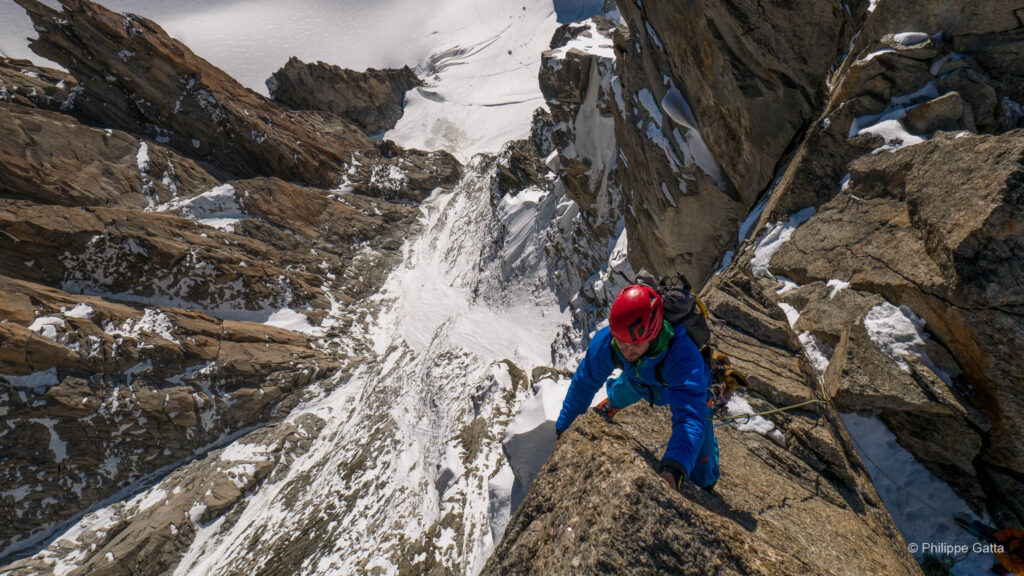
We arrived at Camp 2 (6,000m) after a technical climb on perfect granite. The weight of our 25kg packs added to the difficulty of the pitches, but the weather remained exceptionally calm and warm. We are now positioned for the final push.
Our strategy is to skip Camp 3 and climb light, returning directly to Camp 2 after the summit. We have set our departure for 5:00 AM tomorrow, taking advantage of the stable conditions. The only other climbers above us are two Russians currently at Camp 3.
- Climb: 2h50
- Elevation: +315m (210m/h) / -75m (190m/h)
- O2 Saturation: 75%
- Performance: Max HR 157bpm | VO2 53ml/kg/min
May 2: Camp 2
Snow fell throughout the night, burying the route and triggering small avalanches. Our situation at Camp 2 (6,000m) is delicate: with our food supplies depleted by theft, we can only wait 48 hours. If the weather does not break tomorrow, we will be forced to retreat.
The camp is perched on a narrow 10m x 3m ledge with massive exposure on both sides. Descending the snow-covered slabs below with 25kg packs is currently too risky. Despite the conditions, we watched two Russian climbers reach the summit at 4:00 PM—the first of the season.
May 3: Ama Dablam Summit
We departed Camp 2 at 6:20 AM. Fresh snow made the Grey Tower demanding, and while the Mushroom Ridge offered better footing, the wind remained constant. At Camp 3 (6,300m), Jean-Marc made the difficult decision to turn back; I continued the push alone.
The upper section involved technical grey ice near the Dablam serac and a traverse through deep snow and hidden crevasses. Breaking trail in -26°C windchill and deteriorating visibility, I reached the summit (6,812m) at 3:15 PM. I began a rapid descent, reaching the safety of Camp 2 by 7:00 PM.
- Total Time: 12h30
- Elevation Gain/Loss: 1,270m
- Conditions: -26°C windchill, deep fresh snow, poor visibility
- Stats: O2 Sat 73%
May 4: Camp 2 - BC
Exhausted from the summit push, we descended from Camp 2 to Base Camp. We chose to clear the mountain in one go, carrying 30kg rucksacks containing all our equipment and rubbish to ensure we left no trace on the ridges.
- Time: 4h15
- Elevation: +30m (240m/h) / -1,405m (450m/h)
- Altitude Range: 6,000m – 4,600m
- Load: 30kg pack
May 5: BC - Namche Bazaar
We began our journey back, departing base camp under a blanket of snow and thick fog. We trekked down toward Namche Bazaar, losing significant altitude as we moved back into the heart of the Khumbu.
- Walk: 4h35
- Elevation: +610m (440m/h) / -1,715m (730m/h)
- Altitude Range: 4,600m – 3,450m
May 6: Namche Bazaar - Lukla
We arrived in Lukla during a heavy thunderstorm, marking the end of our trekking. The descent from Namche was quick, despite the challenging weather conditions as we reached the airfield.
- Walk: 4h30
- Elevation: +656m (460m/h) / -1,200m (620m/h)
- Altitude Range: 3,450m – 2,680m
May 7: Lukla - Kathmandu -General Strike
We flew from Lukla to Kathmandu in poor weather, only to find the capital in the grip of a six-day general strike. The streets were heavily patrolled by the military and police, and the atmosphere was thick with tension. Our driver urged us to remain in our hotel for safety.
Fortunately, we were able to book a flight back to France that very same day. It was the third time I had experienced such a departure from Nepal amidst political turmoil, marking a stark contrast to the silence of the high ridges we had just left.
Information
Ama Dablam Southwest ridge
The Southwest Ridge was first climbed by Mike Gill, Barry Bishop, Mike Ward, and Wally Romanes.
The route is graded VI 5.9 60°, 1,500m.
The Autumn season is characterized by stable weather and dry rock, making it the most popular time for expeditions. While the climbing conditions are often optimal, the mountain becomes very crowded, which can impact the overall experience.
The Spring season offers a much more solitary and authentic atmosphere. Although the weather is more unpredictable with frequent afternoon snowfall and deeper snow on the ridges, the low number of climbers allows for a true wilderness expedition, as seen during our climb.
Weather
Autumn Season: Days become shorter, requiring early starts in deep cold. Temperatures are consistent but low, often between -15°C and -25°C at high camps, with very dry air providing excellent visibility.
Spring Season: Benefit from longer daylight hours, though the air is more humid. While mornings can be warmer, the windchill remains severe—often reaching -26°C or lower during afternoon storms. The increased moisture leads to the heavy snow conditions typical of this time of year.
Route description
BC - C2
The route leaves Base Camp (4,650m) and follows grassy moraines toward the Southeast. After reaching a saddle at 5,100m, the path continues toward the Southwest ridge to the Advanced Base Camp (5,400m). From here, boulders and slabs lead North to Camp 1 (5,700m).
From Camp 1, the climb stays below the ridge on the East-Southeast face. After navigating steeper steps and a 5.6 pitch, the route joins a highly exposed ridge. Following this through mixed terrain leads to the Yellow Tower (5.9). A final traverse to the right leads to the narrow perch of Camp 2 (6,000m).
C2 - Summit
From Camp 2, the route follows an exposed ridge to a rock buttress, followed by steep mixed pitches. After traversing the West Face of the Grey Tower via a technical gully, the path reaches the Mushroom Ridge. This section alternates between horizontal traverses and steep 60°-70° steps before arriving at Camp 3 (6,300m).
The final push climbs the steep ice to the right of the Dablam serac. Above the ice cliff, the route moves left across snow slopes and characteristic ice flutes (40°-60°) that lead directly to the summit of Ama Dablam.