
Climbing in the Heart of Wild Euboea
Manikia History
The history of Manikia is very recent, and its exemplary development is thanks to the work of a few French climbers. For several years, they laid the groundwork by involving local and institutional stakeholders to build a sustainable project. Once the foundations were established, they began—and still continue—to open routes in Manikia and Vrisi.
Development is progressing steadily and responsibly; in addition to bolting routes, it includes improving tracks, creating access paths, and cleaning the sectors—a massive and fundamental undertaking.
Between word-of-mouth and the organization of festivals (such as the Petzl Rock Trip), the reputation of Manikia and Vrisi continues to grow. The number of routes is constantly increasing, currently around 600, including many multi-pitch routes.
It is up to us, as climbers, to respect private property, livestock and farming areas, and seasonal closures (nesting periods) to ensure this beautiful adventure endures.
Climbing Styles and Grades
Despite the relatively modest number of routes, Manikia offers a multitude of small sectors with a wide variety of profiles and climbing styles. You will find compact grey walls, slabs, overhangs, and caves. One distinct feature compared to Kalymnos or Leonidio is the higher proportion of multi-pitch routes.
All grades are represented, with a majority of routes in the 6th grade (around 40%), the 7th grade (around 30%), and a good number of 8a/8a+ lines, though these are spread across different crags (with the exception of Paralia and the North Face).
Manikia Climbing Trips
We were told, “In Manikia there aren’t many routes; in two weeks you’ll have climbed it all.” We had barely returned home when we were already booking our next trip…
The number of routes is certainly modest compared to Kalymnos or Leonidio, but the quality is undeniable, and the experience is entirely different. In Manikia, there are fewer routes to climb and fewer things to do after climbing, but there are also fewer people at the cliff and thus more sharing. The routes are brand new, the rock is a skin-eater, holds might break, there’s no chalk build-up, and the villages are truly authentic. One could summarize by saying that Manikia is what Kalymnos or Leonidio was 15 years ago.
Manikia cliffs
While people generally refer to Manikia, the cliffs are actually located primarily between Vrisi (to the east), Manikia (to the west), and Makrychori (to the south).
Near Vrisi, there are several superb crags—Dragonera, Eisodos, and Rolling Stones—which are also easily accessible from the campsite. Also close to Vrisi are the Lower Valley sectors, such as Sisyphe or Archaía. Moving closer to Manikia, you will find Daxi Daxi, Manikia Kentro, and Le Bal Con…
Finally, further south lie the magnificent sectors of the Canyon (Manikia Paralia) and those of the North Face: Moonikia Project, Nagawika, Eldorado, Ena Thryliko… Note that the North Face crags are the only ones that stay in the shade, but they are subject to seasonal closures from January to June due to nesting periods.
Access to the Canyon and North Face parking areas is via unpaved tracks (about a 15-minute drive). While manageable with a standard city car, they require careful driving—especially the track to the North Face—and can become difficult after heavy rainfall or when driving a van.
Unlike Kalymnos or Leonidio, there is no polished rock here, and no overcrowding.
Bolting and Rebolting
While the first routes were opened by Greek climbers, it was thanks to the work of several French climbers over nearly three years that the Manikia site truly began to develop. In 2018, the Manikia Project association was founded, with the support of the Kymi–Aliveri municipality. A year later, they had already opened 350 routes. Since then, many climbers have been contributing to the opening and maintenance of the routes.
The superb central sector of “Les Larmes de Sisyphe”. Here, the routes—mostly in the 7th grade—range from 20 to 40 meters in length. “Les Larmes de Sisyphe” is located in the lower Manikia valley, which is home to nearly a dozen sectors.
300 finest routes in Greece
Kalymnos, Leonidio, Kyparissi, and Manikia
Anna and I are currently completing a book on the 300 finest routes in Greece (in French). It covers the four major destinations: Kalymnos, Leonidio, Kyparissi, and Manikia.
Out of the 7,000 routes equipped across these four exceptional sites, we have climbed 1,200 of them—ranging from 6a to 8b—and have ultimately selected the best 300 for this book.
The selection process was challenging and based on specific criteria: the widest possible variety of crags and climbing styles; the quality of the lines and their equipment; a balanced spread of grades from 6a to 8b; a mix of recent sectors and great classics; a sufficient number of interesting routes per crag; and a preference for sectors that are not overcrowded or overly polished.
The first part of the book provides comprehensive information on trip planning: transport, climate, seasons, gear, and an introduction to physical preparation and energy management.
The guide is organized into four comprehensive sections: Kalymnos, Leonidio, Kyparissi, and Manikia—covering a total of 300 routes across 35 crags. For every selected crag, a dedicated chapter provides essential details such as orientation, sun exposure, and climbing style. Particular attention is paid to access, providing GPS coordinates for parking and the cliffs, as well as descriptions, duration, and elevation gain for the approaches.
Each sector presents a selection of the finest routes, ranked by difficulty and accompanied by personal commentary. Finally, we offer suggestions for combining sectors or activities.
The Manikia section of the book covers 4 crags and 28 routes, with many other suggestions.
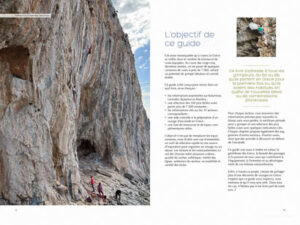
Publication scheduled for early March.
Typical views of the Manikia valley, here showing the central part.
Manikia Information
Recommended Periods
Manikia and Vrisi have a pronounced Mediterranean climate, with hot, dry summers and wetter winters. As is often the case in Greece, the best times for climbing are autumn and spring. However, compared to Kalymnos and Leonidio, the region is less influenced by sea breezes: the weather is often warmer and more stable, but can also be more stifling during the summer months.
Getting There & Around
The simplest way to get to Manikia is to fly into Athens, which offers numerous direct connections from across Europe. Once at Athens International Airport, you will need to rent a car; there is a wide selection of rental agencies both at the airport and in its immediate vicinity. The drive to Manikia or Vrisi is approximately 160 km and takes between 2.5 and 3 hours.
The Canyon and its series of sectors—featuring Manikia Paralia and Small Cave in the photo—is one of our favorites. There are some beautiful routes and a pleasant approach walk, all set in a peaceful and very sunny location.
Accommodation
Accommodation options around Manikia and Vrisi remain limited for now, but they are gradually expanding. You can find a few guesthouses, apartments, and a campsite. In any case, you will be staying in small, quiet, and authentic villages. Konistres, located about twenty minutes from Manikia, offers many more possibilities, including options for grocery shopping or refueling your car.
We have a preference for Konistres, which has more cafés and shops, and is only 20 minutes away from the sea.
Dining & Greek Cuisine
Dining in the Manikia and Vrisi region offers a true taste of rural Euboea, far from the typical tourist trails. The local cuisine is deeply rooted in mountain traditions, featuring hearty dishes like slow-cooked goat, locally foraged greens (horta), and handmade pasta. Because these villages are small, the tavernas offer a very personal experience, often serving whatever was freshly harvested or prepared that day.
While Manikia and Vrisi have a few charming spots for a post-climb meal, Konistres serves as the main hub for more variety. There, you can find traditional grill houses (psistarias) serving excellent lamb chops and souvlaki, as well as local bakeries famous for their honey-soaked desserts and savory pies. For those staying in apartments, the local markets in Konistres are the best place to find artisanal cheeses and honey. Although the lifestyle is quiet, the authentic hospitality and the quality of the farm-to-table ingredients make every meal a highlight of the trip.
Supplies & Services
Manikia and Vrisi are small, traditional villages with very limited commercial services. You will find basic necessities, but for anything beyond the essentials, Konistres is the place to go. Konistres offers a variety of supermarkets, traditional bakeries, and small specialty shops.
For practical logistics, Konistres is also where you will find the nearest gas stations and ATMs. While there is no dedicated climbing shop in this area yet, the local community is very supportive of climbers.