
The Gobi March
Navigating the High Basins of Central Asia
The Gobi March is a 250km (155-mile) ultramarathon and a part of the 4 Deserts series. Organized by RacingThePlanet, this series includes self-supported endurance races. While I have also completed their other events—including the Atacama Crossing, the Sahara Race, Madagascar, and Wadi Rum—the Gobi March has a distinct topography that sets it apart.
The race follows a format similar to the Marathon des Sables: six stages over seven days. The progression is consistent, consisting of four marathons, followed by the 75km stage, a day of rest, and a final 16km sprint. The responsibility for logistics rests on the competitor; the race is self-supported. Every runner carries their own clothing, sleeping bag, mandatory safety equipment, and seven days of food. The organizers provide communal tents and a daily water ration of 10 to 13 liters.
Equipment preparation is a key part of the race. Balancing caloric density against weight is an important consideration, with the goal of keeping the pack under 7kg (dry weight). Every gram is significant when navigating the high-altitude terrain of the Xinjiang Uyghur Autonomous Region. Based near the city of Kashgar, the race takes place in China’s far west, near the border with Tajikistan. Unlike the Saharan dunes, the Gobi’s climate at this latitude is more variable. During the day, temperatures reach approximately 35°C, but as the sun sets behind the Tian Shan, Kunlun Shan, and Pamir mountain ranges, the temperature can drop to 5°C.
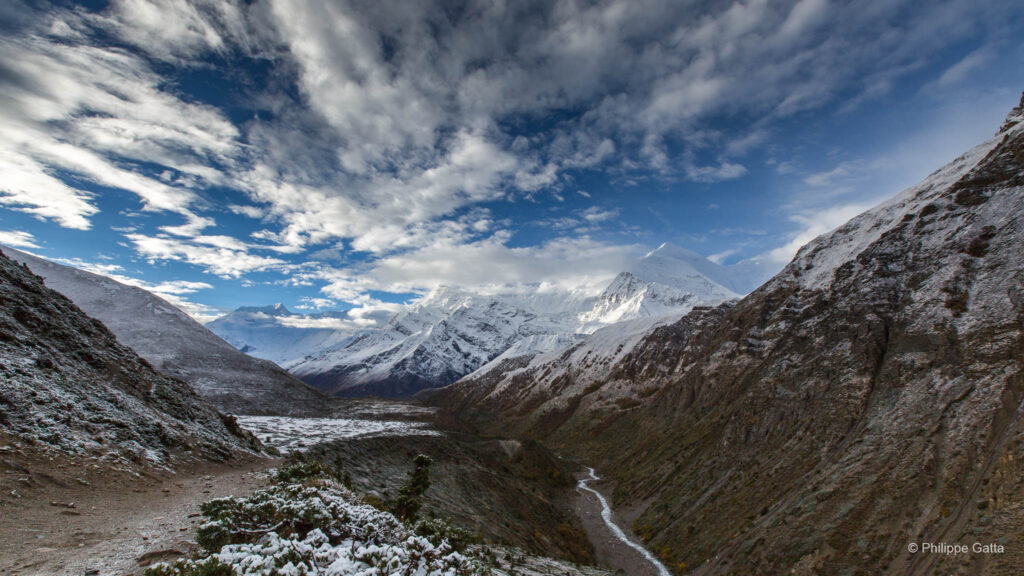
The 2012 edition showed the Gobi‘s geology. Rather than the sand dunes of the Atacama or Sahara, the course was dominated by rocky trails, dry riverbeds, and dirt roads. Operating at elevations between 1,500m and 3,000m, the altitude adds a level of difficulty not found in sea-level desert races. The challenge includes the heat, the distance, and the mountainous backdrop of the Central Asian high desert.
Gobi March
Pre-Race Rituals and the Gateway to the Silk Road
All competitors converged on Kashgar (Kashi) several days before the start to acclimate to the dry air and altitude. This city, formerly a crossroads on the Silk Road, was our final contact with civilization. On Saturday, we underwent the mandatory race briefing, medical check-ins, and an equipment review to ensure every pack met the safety requirements.
Following the checks, 160 competitors representing 42 different nations traveled southwest of Kashgar. Our destination was Gazi, a village in the foothills of the Pamir Mountains. Due to recent rains, the first camp was relocated lower in the valley to ensure stable ground.
We were welcomed by the local community. The afternoon before the race included a demonstration of Buzkashi, a Central Asian sport. We observed riders on horseback compete in a contest to seize a goat carcass. The objective is to secure the carcass, navigate it around a marker, and cast it into a scoring circle. Witnessing this equestrian demonstration in the Gazi valley provided an introduction to the cultural landscape of the Xinjiang region.
As the sun set, we had a final meal before beginning a seven-day diet of freeze-dried rations. The race began the following morning, marking the start of the journey through the Gobi.
Stage 1: “Canyons and Camels” – 32 km
Waking up at 1,800m, the air was crisp, and the sky was clear blue. The Gobi morning was met with a minor adjustment during the race briefing: due to logistical changes in the valley, the first stage had been shortened to 32km.
The race began on a wide dirt road winding alongside a glacial river. Despite the heavy packs, the lead group set a fast pace on the downhill gradient, with runners averaging 12–13 km/h. I attempted to maintain contact with the leaders but realized I was struggling.
I crossed the finish line in a state of exhaustion after only 32km. Despite the sun’s warmth, a chill settled into my bones. It was difficult to determine whether this was travel fatigue, jetlag, or the onset of a cold, but my body was not yet in its rhythm.
In a departure from the standard tent bivouacs, Camp 2 was set within the village of Tashpushka. Instead of the usual *khaïmas*, we were hosted in local houses, providing a moment of cultural immersion and a sheltered environment for recovery.
The stage was led by Vicente Juan Garcia Beneito, who won with a time of 2h 37. I managed to cross the line in 7th place with a time of 3h 19, while the tail of the pack arrived after 8 hours on the trail. It was a challenging start to the week, as in the Gobi, health is as important as training.
Winner’s Time: 2h 37. My Ranking: 7th (3h 19)
Stage 2: “Mars in the Gobi” – 39 km
During the morning briefing, the organizers described a varied route, notably a segment through canyons. At 8:00 am, we set off under the sun, though I began the day still carrying fatigue from Stage 1.
The stage opened with several kilometers of climbing. My body was slow to respond, and I reached the first checkpoint in 20th position. However, as we moved from the open road into the canyons, my energy improved. The terrain was more technical than the previous day—a network of steep ascents and descents that required focus. By the time we emerged from the canyons, I had moved up to 6th position, running for a long stretch alongside another competitor, George.
Once clear of the canyons, the course opened into a plateau. The visibility was good, offering views of the Tian Shan to the north and the Karakorum range to the south. The scale of the Central Asian wilderness was visible, providing a mental boost.
The final 9km presented a different challenge: a stretch of paved road. While the mountain scenery remained, the hard surface was demanding for the feet after the trails of the morning. Despite the asphalt, I felt better as the day progressed, shaking off the malaise of the first stage and beginning to enjoy the race.
Camp 3 was located in a lush area surrounded by trees and green fields—a contrast to the arid canyons we had navigated earlier. Vicente Juan Garcia Beneito secured another victory with a time of 3h 15. I crossed the finish line in 5th place in 5h 12, while the final competitors reached the bivouac after 9h 50.
Stage 3: “The Farmlands of Langeville” – 36 km
The third stage began in the village of Langeville, offering a glimpse of rural life. The initial kilometers were lush, as we ran through wooded areas and cultivated fields. However, this environment eventually gave way to the nature of the Gobi.
As we moved away from the forest, the terrain shifted to hilly, rocky, and technical ground. The footing was unstable, requiring concentration to avoid injury, while the effort was rewarded by mountain views on the horizon. Early in the stage, I linked up with Anne-Marie, the leading woman. We found a shared rhythm and completed the stage together.
Between the second and third checkpoints, the course was technical. We moved off-trail, navigating a series of steep ridges before dropping into a dry riverbed. This was adventure racing—finding the line through a demanding landscape.
The final 8.4km from the third checkpoint to the finish were demanding. We were forced to run uphill on soft gravel alongside a road under construction. Progress was slow with our feet sinking into the loose stones. For the first time, the desert heat became a factor. Reaching the camp was a relief, and I sought out available shade.
This bivouac marked our highest sleeping point of the race, situated at an elevation of 2,525m. The altitude made recovery a challenge. Vicente Juan Garcia Beneito finished the stage in 3h 46. I finished in 4th place in 4h 38, while the final runners completed their day in 9h 30.
Stage 4: “Stairway to Heaven” – 37 km
Stage 4 was a technical day before the “Long March”. It consisted of climbs and canyons through a varied geography.
The morning began in the dark. At 2,525m, starting the day with fatigued muscles was a psychological effort. As the sun reached the peaks, we began a 4km climb toward a canyon system. Our destination was Shipton’s Arch (also known as *Tushuk Tash*).
To reach the arch, the organizers allowed us to leave our packs at the canyon floor. We navigated twelve vertical ladders bolted into the rock. Reaching Shipton’s Arch—the world’s tallest natural stone arch—provided an expansive view. I spent a few minutes looking at the formation before beginning the technical descent back to the first checkpoint.
The mid-section of the stage was a trail running section. We crossed a series of ridges with views over the region. The terrain was technical, requiring agility. This was followed by a 6km descent through a rocky riverbed where foot placement was important.
The final stretch moved from the canyon section into a construction zone, running several kilometers through dust and industrial traffic. The race had a change: the finish line was moved 3km earlier than planned. A local river had become difficult to cross due to meltwater. It was a decision that reflected the nature of the Gobi.
My ranking was 3rd for the stage with a time of 5h 19, nineteen minutes behind Vicente Juan Garcia Beneito. The final runner crossed the line after ten hours and thirty-one minutes.
Stage 5: “The Long March” – 75.4 km
The “Long March” is the main stage of the 4 Deserts series—a physical challenge. It is nearly a double-marathon, completed after having already logged 160km over the previous four days. The day began with a 5:00 am wake-up call, followed by a two-hour bus ride to the starting line. I used that time for breakfast and a rest.
By the time the race began at 10:00 am, the Gobi heat was radiating from the ground. I started at a managed pace, running with John to manage my energy. Shortly after the second checkpoint, we joined Justus and Anne-Marie. The scenery was expansive—open areas framed by peaks exceeding 7,000m—but the calm was short-lived.
The weather shifted abruptly. Dark clouds gathered, and we observed rain falling in the distance while the wind began to increase. By the fifth checkpoint, the situation changed; sand twisters were swirling kilometers away across the flat terrain. As the wind and sandstorm intensified, visibility dropped. During the storm, I felt an increase in energy. I accelerated, leaving my companions behind as they struggled with the conditions.
Navigating through the sandstorm was a test of endurance. At times, I could only see one trail marker at a time. The headwind was strong and slowed my progress. However, passing two local women working in a field provided a perspective; I continued to run. I reached the final checkpoint in 60km/h winds, eventually catching the gusts from behind. I filled my water containers and focused on the remaining distance.
Reaching the finish line was a relief. I crossed the line in 3rd place with a time of 8h 38, joined by Mo and Vicente. I spent the rest of the evening waiting for Justus, George, Anne-Marie, and John. Vicente Juan Garcia Beneito finished the stage in 7h 14, while the final competitor completed the day in 24h 15.
Technical Summary – Stage 5:
- Distance: 75.4km
- Conditions: Sandstorm, 60km/h winds, high-altitude desert.
- Key Moment: Accelerating through the storm while navigating marker-to-marker.
- My Ranking: 3rd (8h 38)
Rest Day
The day following the Long March was a period of exhaustion and recovery. Falling asleep was difficult as the body was fatigued and the mind remained active. I woke up in the final camp feeling drained and hungry.
The energy balance of a self-supported race was clear. According to my records, I burned approximately 6,000 calories during the 75km stage. Including the basal metabolic rate and the thermal energy required for the night, the total expenditure for the twenty-four hour period was 8,000 calories.
I had budgeted 4,000 calories for that day. This gap created a deficit that had been growing since the start of the week. By the end of the race, I had burned significantly more calories than I had consumed. This energy debt explains the fatigue that required recovery time.
In the morning, we observed runners arrive at camp, some after more than twenty hours of movement. The atmosphere was quiet. We rested in the shade and discussed the return to Kashgar. The race in the Gobi was nearly over, with only one short stage remaining.
Stage 6: “The last old City” – 16 km
In the final morning briefing, the organizers confirmed 15km between us and the finish. According to our watches, the distance was 16.4km.
By the seventh day, the cumulative toll of the Gobi was visible. We were affected by high altitude, heat, and several days of self-sufficiency. Before the start, the lead group intended to maintain a moderate pace. However, once the clock started, participants accelerated to protect or improve their rankings.
I teamed up with John for the final stretch. We supported each other to maintain our respective positions. We completed the 16.4km in 1h 15—a pace that felt demanding given our state of exhaustion.
Crossing the finish line brought a sense of satisfaction. I secured 3rd place overall, with Anne-Marie taking 4th, Justus 5th, John 6th, and George 7th. Beyond the rankings, the experience was shared with fellow athletes and tent mates. It was a privilege to complete the race alongside them.
The stage was claimed by Vicente Juan Garcia Beneito in 1h 08. I finished the stage in 6th place, while the final competitors completed their journey six hours later. The Gobi March was over; the streets of Kashgar welcomed us back after one of the more demanding footraces.
Final ranking
Out of 160 participants, 145 completed all stages of the 2012 Gobi March.
The top 10 results:
- 1 Vicente Juan Garcia Beneito (Spain) – 23h 12
- 2 Mo Foustok (Saudi Arabia) – 24h 28
- 3 Philippe Gatta (France) – 27h 45
- 4 Anne-Marie Flammersfeld (Germany) – 27h 53
- 5 Justus Meyer (USA) – 27h 58
- 6 John Ross (USA) – 28h 53
- 7 George Chmiel Jr (USA) – 28h 54
- 8 Jochen Pfannenstill (Austria) – 29h 42
- 9 Mustafa Kiziltas (Turkey) – 30h 32
- 10 Fergus Edwards (Scotland) – 30h 41
Practical Information
The Gear List (Total Dry Weight: ~7 kg)
For this edition, I reused my equipment from previous races, reducing the load to the essentials.
- Pack: A 40L lightweight racing pack (600g).
- Clothing: One long-sleeved and one short-sleeved technical tee, one pair of shorts, and two pairs of socks. A neck gaiter and a warm hat were used for the cold Gobi nights.
- Sleeping System: A foam mattress and a sleeping bag with a comfort rating of 0°C.
- Footwear: Trail running shoes fitted with light gaiters.
- Electronics and Tools: A multi-sport watch for distance and speed, a waterproof camera with three batteries, and two headlamps.
- Safety and Medical: A mandatory safety kit (light, whistle, survival blanket) and a medical kit focused on blister care and pain relief.
Nutrition and Caloric Strategy
The race rules mandate a minimum of 14,000 calories, but experience has shown that this is insufficient for a competitive pace. For the Gobi March, I carried 21,240 calories, which weighed 4kg.
My nutritional breakdown was designed for endurance and recovery:
- Carbohydrates (57%): The primary fuel for the daily marathons.
- Fats (25.7%): Used for long-term energy and caloric density to reduce weight.
- Protein (17.3%): Important for muscle repair between stages.